
Your Heat Pump & Electrical Questions Answered (NZ, 2026)
By the Superheat Electrical team – registered electricians and heat pump installers. Last updated November 2026.
We get asked the same questions on almost every job, so here are straight answers from the people who actually install, wire and fix this gear in Kiwi homes every week. Prices are 2026 NZ ranges; your exact cost always comes down to your house, so treat them as a guide and get a site visit for a firm quote.
Quick answers
| Question | Short answer |
| Cost of a high-wall heat pump, installed | About $1,700–$4,000 for a standard back-to-back install |
| Cost of a ducted heat pump | Typically $8,000–$20,000+ incl. GST, depending on house size and zones |
| Leave it on 24/7? | No. Use the timer and run it when you’re home |
| Best winter setting | 18–21°C on Heat mode, not Auto |
| Electrician hourly rate | Roughly $90–$130 + GST, plus a call-out or first-hour charge |
| Switchboard upgrade | Usually $1,500–$4,500 |
| EV charger installed | Commonly $2,000–$3,500 for a 7 kW smart charger |
| Can I do my own wiring? | Only limited work, and it must be inspected and certified |
| Do I get a certificate? | Yes – a CoC for any fixed wiring, including new power points |
Heat pump questions
How much does a heat pump cost to install in NZ?
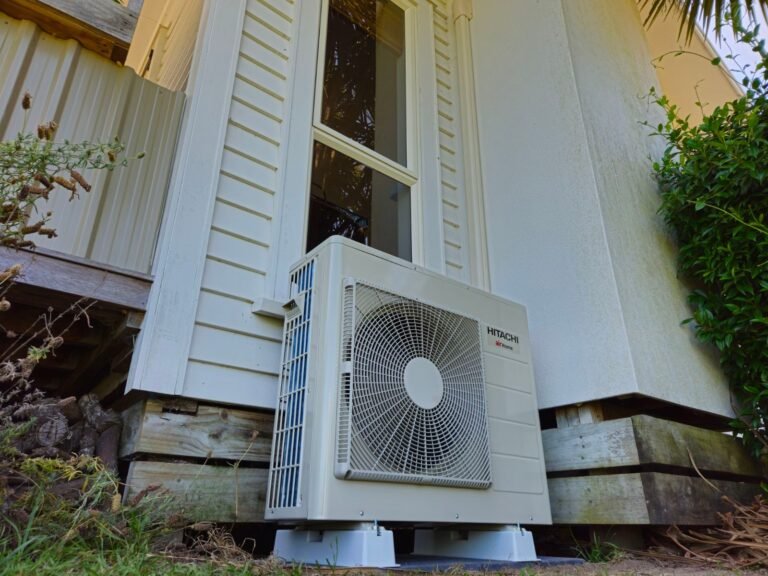
A standard high-wall heat pump costs about $1,700–$4,000 supplied and installed in 2026. That covers a back-to-back install, where the outdoor unit sits on the other side of the same wall. Long pipe runs, two-storey access, a new circuit or a switchboard upgrade add to that.
From experience, the unit is rarely where quotes differ most. It’s the install: pipe length, where the outdoor unit goes, how the condensate drains, and whether the electrical side is done properly. Always ask what’s included.
How much does a ducted heat pump cost?
A ducted heat pump typically costs $8,000–$20,000+ incl. GST in NZ. Smaller 8–10 kW systems in a single-level home sit at the lower end; large homes, multiple zones and tricky roof spaces push past $20,000.
Ducted systems hide everything in the ceiling. You only see slim outlets in each room and a return grille in the hallway, and one controller runs the whole house.
Is a ducted heat pump worth it, or should I get high-wall units?
Ducted is worth it if you want every bedroom warm, you have roof space, and you’re building or renovating. Two or three high-walls are better value if you mainly heat the living area and a couple of rooms. For an existing 3-bedroom home, the price gap is often smaller than people expect once you add up three separate installs.
Questions we ask before recommending one: How many rooms do you want heated at night? Is there at least 600 mm of clear roof space? Are you planning a renovation in the next few years?
What size heat pump do I need?
Most NZ living areas need a 5–8 kW heat pump; bedrooms usually need 2.5–3.5 kW. Size by the room’s volume, insulation, glazing and climate, not just floor area. A rough starting point for a well-insulated modern home is about 50 W per cubic metre of room volume.
Too small and it runs flat out and still can’t keep up. Too big and it short-cycles, costs more up front and wastes power. A proper installer measures the room and checks windows, ceiling height and insulation before quoting a size. For ducted systems we size room by room, then add it up.
Should I leave my heat pump on 24/7?
No. EECA, the government’s energy efficiency agency, says running a heat pump 24/7 uses more energy than switching it on when you need it. Use the timer to warm the room 30 minutes before you get up or get home, then turn it off when you leave or go to bed.
The exception is a home that’s occupied all day, such as with a newborn or elderly family member, in a well-insulated house. Then a steady lower setting can make sense.
What temperature should I set my heat pump to in winter?
Set it to 18–21°C on Heat mode. Setting it to 25 or 30°C won’t heat the room faster; it just overshoots and costs more. Each extra degree adds roughly 5–10% to running costs.
Also, use Heat (the sun symbol), not Auto. In Auto the unit can switch to cooling when the room warms up, which wastes power.
How much does a heat pump cost to run?
A typical 6 kW heat pump used 6 hours a day for 6 months costs around $400 a year to run, based on Gen Less figures. Heat pumps produce roughly three units of heat for every unit of electricity, which makes them the cheapest form of electric heating for living areas.
Your actual cost depends on your power rate, insulation and how you use it. A higher energy star rating saves more over the unit’s 15-year life than the price difference at purchase.
Do heat pumps work when it’s freezing outside?
Yes. Modern inverter heat pumps are designed to keep heating at -10°C or lower, which covers almost all of NZ. On frosty mornings the outdoor unit runs short defrost cycles; it may stop blowing warm air for a few minutes. That’s normal, not a fault.
Can I get a government grant for a heat pump?
Possibly. EECA’s Warmer Kiwi Homes programme covers up to 90% of an approved heat pump, up to $3,450, for eligible owner-occupiers. Eligibility generally depends on the home being built before 2008 and on income or area criteria, and the home must meet insulation standards. Use EECA’s online eligibility checker; grants for wood and pellet burners ended in January 2026.
How often should a heat pump be cleaned or serviced?
Clean the indoor filters every 2–4 weeks in winter, and book a professional service once a year. Clogged filters reduce airflow, cost you more in power and can make the unit smell or leak water.
A proper service includes cleaning the coil and fan, checking the drain, testing refrigerant performance and checking the electrical connections. We see a lot of “broken” heat pumps that just need a clean.
Why is my heat pump blowing cold air in heat mode?
Usually it’s one of four things: it’s in a defrost cycle (normal, a few minutes), it’s set to Auto or Cool, the filters are blocked, or there’s a refrigerant or sensor fault. Check the mode and filters first. If it’s still cold after 15 minutes on Heat, call a technician.
Electrical questions
How much does an electrician cost per hour in NZ?
Most residential electricians in NZ charge about $90–$130 an hour + GST in 2026, plus a call-out or first-hour fee of roughly $110–$220. After-hours and emergency call-outs often cost double. Apprentices are charged at a lower rate when a second pair of hands is needed.
For anything bigger than a small fix, ask for a fixed-price quote. Make sure every quote you compare includes testing and certification.
How much is a switchboard upgrade?
A switchboard upgrade usually costs $1,500–$4,500 in NZ. Price depends on the board size, how many circuits need new RCD or RCBO protection, and whether the mains or meter box also need work.
Signs your board is due: old ceramic fuses, no RCD (safety switch), scorch marks or a burning smell, breakers that feel warm, or no room to add a circuit for a heat pump, EV charger or new kitchen.
How much does it cost to install an EV charger at home?
A 7 kW smart EV charger typically costs $2,000–$3,500 installed. The charger itself is around $800–$1,500; the rest is labour, cable and protection. The biggest cost driver is the distance from your switchboard to where you park.
In NZ, a wall charger must be installed by a registered electrician on its own dedicated circuit, and you should get a Certificate of Compliance. If your switchboard is full or old, budget for an upgrade too.
How do I check if an electrician is licensed?
Search their name or registration number on the Electrical Workers Registration Board (EWRB) public register at ewrb.govt.nz. A registered electrician should also show you their current practising licence card. Anyone other than a homeowner doing prescribed electrical work must be registered and licensed.
What electrical work can I legally do myself in NZ?
Homeowners can do a limited amount of electrical work on their own home, but it must be checked, connected and certified by a licensed electrical inspector. You can do things like replace switches and sockets on existing circuits. You must never work inside the switchboard beyond replacing fuse wire or fuse cartridges.
Landlords can’t do this work on rental properties, and nobody unlicensed can do electrical work on someone else’s home or for payment. WorkSafe’s advice is clear: if you’re in doubt, use a licensed electrician. Unsafe DIY can also void your house insurance.
What is a Certificate of Compliance (CoC)?
A Certificate of Compliance (CoC) is the legal document an electrician issues to show new or altered wiring is safe and meets NZ standards. You must get one for any fixed wiring work, including new power points, a heat pump circuit, an EV charger or a switchboard upgrade.
Keep every CoC. Your insurer, council (for a code compliance certificate) and future buyers may ask for them.
Why does my RCD or safety switch keep tripping?
An RCD trips when it detects electricity leaking to earth, usually from a faulty appliance, moisture in an outdoor socket or light, or damaged wiring. It’s doing its job: protecting you from a shock.
Safe first check: switch everything off at the wall, reset the RCD, then plug appliances back in one at a time. If it trips on one appliance, that appliance is the problem. If it trips with nothing plugged in, after rain, or won’t reset at all, stop resetting it and call an electrician.
Does a heat pump need its own circuit?
Yes, in almost every case. A heat pump should be on its own dedicated circuit from the switchboard, sized for the unit, with an isolating switch next to the outdoor unit. Piggy-backing onto an existing power circuit is a common cause of nuisance tripping and is not compliant.
This is why we prefer one company to handle both the heat pump and the electrical side. One team, one CoC, no finger-pointing.
How do I know if my house needs rewiring?
Your house likely needs rewiring if it still has old rubber- or cloth-insulated cable (common before the 1960s), ceramic fuses, switches or sockets that feel warm, flickering lights, or a burning smell. An electrical safety inspection will tell you for sure. In older homes we often rewire in stages, starting with the highest-risk circuits.
Questions to ask before you sign any quote
- Are you a registered electrician, and will I get a Certificate of Compliance?
- How did you work out the kW size, and for which rooms?
- Is a dedicated circuit and isolator included, and does my switchboard have room?
- Where will the outdoor unit and condensate drain go?
- What warranty is on the unit, and what’s on your workmanship?
Get a straight answer for your home
Every house is different, and the right heat pump or electrical fix depends on yours. Superheat Electrical handles both the heat pump and the wiring, so you get one team, one quote and one Certificate of Compliance. Book a free site visit or send us a photo of your switchboard and floor plan for a quick estimate.
Sources
- EECA – Save on your energy bills (24/7 heat pump use)
- EECA – Warmer Kiwi Homes
- Consumer NZ – Heat pump FAQs (cold-weather performance)
- Mitre 10 – Heat pump installation cost
- Rinnai NZ – Cost of an air conditioner / heat pump
- Genesis – Heat pump running cost (Gen Less figures)
- WorkSafe – Getting electrical work done (CoC, licensing)
- WorkSafe – Doing your own electrical work